AI Visibility Metrics
JSON-LD
Understand JSON-LD, a structured data format used to help search engines and AI systems interpret website content more effectively.


No credit card needed ✦ 14-day trial on all plans
AI Visibility Metrics
Understand JSON-LD, a structured data format used to help search engines and AI systems interpret website content more effectively.
AI Answer Mechanics
Learn what a knowledge cutoff is and how it defines the latest information available within an AI model's training data.
Entity & Authority
Discover how knowledge graphs organize entities and relationships to help AI systems understand facts and connections.
Inline citation is a direct reference or link placed right inside the AI's answer text.
Inline citation refers to when an AI system directly references a specific source (usually with a link or footnote) right next to the information it uses within its generated answer.
An inline citation is an AI’s way of showing “this fact came from here.” Instead of giving a general list of sources at the end, the AI adds a small citation (like a number or link) immediately next to the relevant sentence or claim.
This makes answers more transparent and trustworthy.
Inline citations significantly boost user trust. A study found that AI responses with inline citations were perceived as substantially more trustworthy than those without citations, even when the citations were not always verified by users.
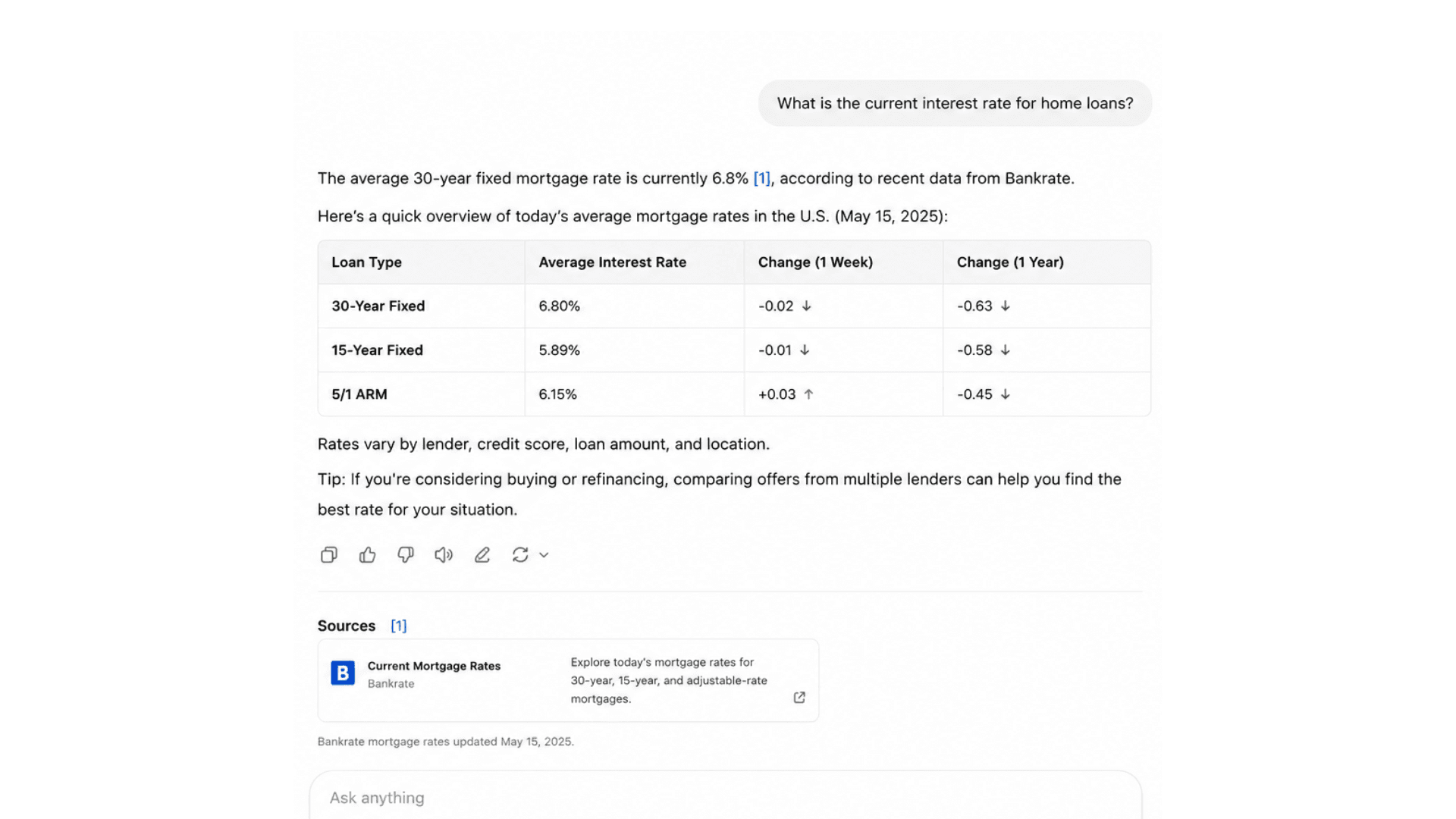
Inline citations are generated when AI systems track the origin of each piece of information they use:
Source retrieval. AI pulls relevant information from multiple documents.
Attribution tracking. The system keeps track of which source provided each specific claim.
Response drafting. AI writes the answer while maintaining links to original sources.
Inline placement. Citations are inserted next to the relevant statements.
Transparency display. Users can click or hover to see the original source.
Inline Citation
Citation
Inline Citation
Citation
Inline Citation
Citation
Inline Citation
Citation
Inline Citation
Citation
Inline Citation
Citation
Inline Citation
Citation
Inline citations are considered a sign of higher-quality, more responsible AI responses.
Not all AI models support inline citations equally (**Perplexity** and **Gemini** are currently strong in this area).
Good inline citations require the original content to be clear and well-structured.
They help reduce user skepticism about AI answers.
Inline citations can significantly boost brand credibility when your content is referenced.
The presence of inline citations often correlates with higher user engagement.
To increase the chances of your content being used with inline citations:
Write clear, specific, and factual statements that are easy for AI to attribute.
Use well-structured content with short paragraphs, bullet points, and tables.
Include precise data, statistics, and original insights with clear context.
Add transparent internal sourcing and references within your own articles.
Implement strong **schema markup** to help AI understand and credit your content.
Maintain high E-E-A-T standards, so AI feels confident citing you directly.
Keep content fresh and accurate, especially for time-sensitive topics.